 FA
FA
Technological advances over the past decade have transformed the structure of international commercial arbitration. Today, the use of electronic systems, intelligent case management, legal data analysis, and even prediction of arbitral outcomes through artificial intelligence algorithms has become an integral part of dispute resolution mechanisms. In the rapidly expanding economic relations between Iran and China, the digitalization of arbitral processes can play a significant role in reducing costs, expediting proceedings, and enhancing transparency. This article examines the role of technology and artificial intelligence in commercial arbitration between Iran and China and analyzes its advantages, challenges, and practical implementation strategies.
Transformation of arbitration through new technologies

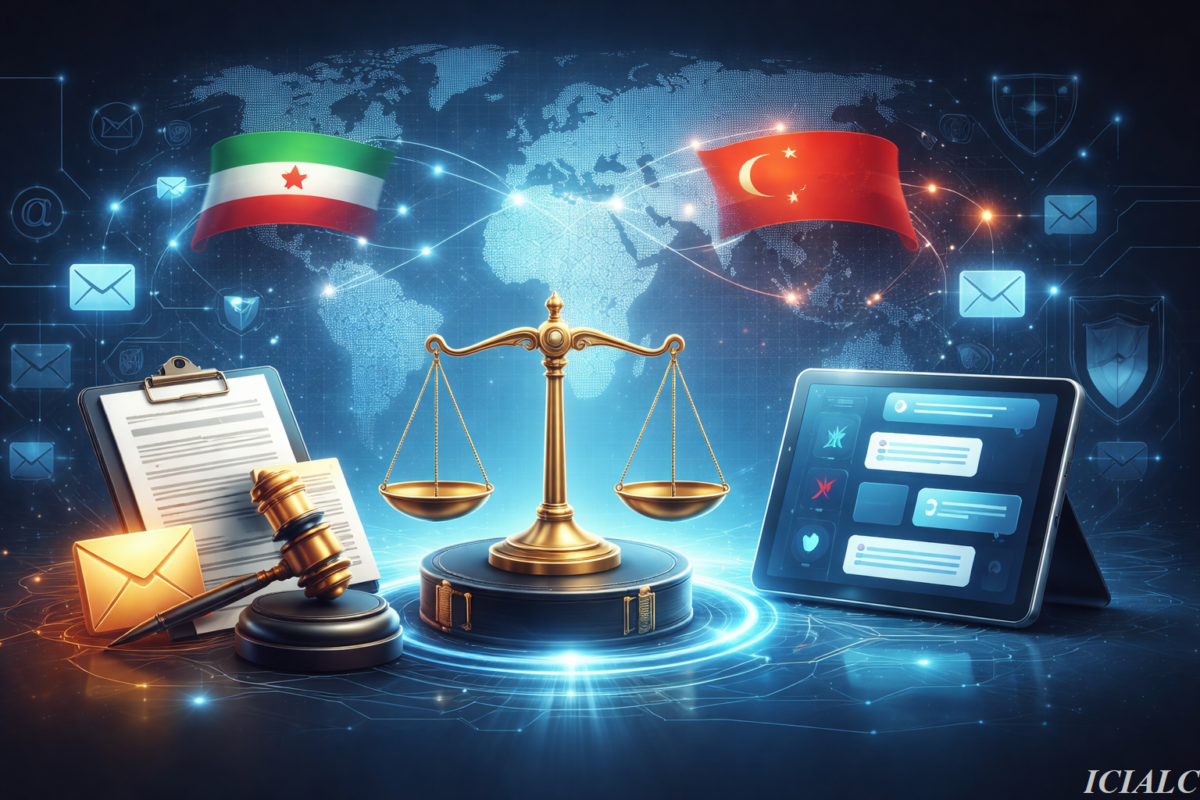
The expansion of digital technologies in recent years has fundamentally reshaped the structure of international arbitration. In legal and commercial relations between Iran and China, where the volume of documentation is high and geographical distance is a determinative factor, this transformation has not only accelerated the proceedings but has also reduced costs and created greater transparency. Today, the digitalization of arbitral processes has made it possible to conduct a substantial portion of traditional correspondence and procedural steps electronically. The use of case‑management platforms allows the filing of requests for arbitration, the submission and exchange of documents, the filing of briefs, and the tracking of case status to be carried out without physical presence and solely through electronic means. This is particularly important in disputes between Iran and China, which usually involve voluminous and multilingual documentation, since it reduces errors and delays, enables simultaneous access for the parties, counsel, and arbitrators, and makes the process more orderly and transparent.
In parallel with the development of secure communication tools, it has become easy to hold online hearings, provide explanations, take witness testimony, conduct expert meetings, and even organize case‑management conferences. For Iranian and Chinese parties, this development is not merely a technical change; it has tangible practical and economic effects. Eliminating travel costs, reducing waiting time for in‑person hearings, enabling faster and more effective participation of legal and technical representatives, and easier access to international arbitrators are among the key advantages. Consequently, arbitration, which was previously a time‑consuming and costly process, is now used in a flexible, efficient, and modern format and contributes to strengthening confidence and cooperation in Iran–China commercial relations.
Applications of artificial intelligence in commercial arbitration between Iran and China
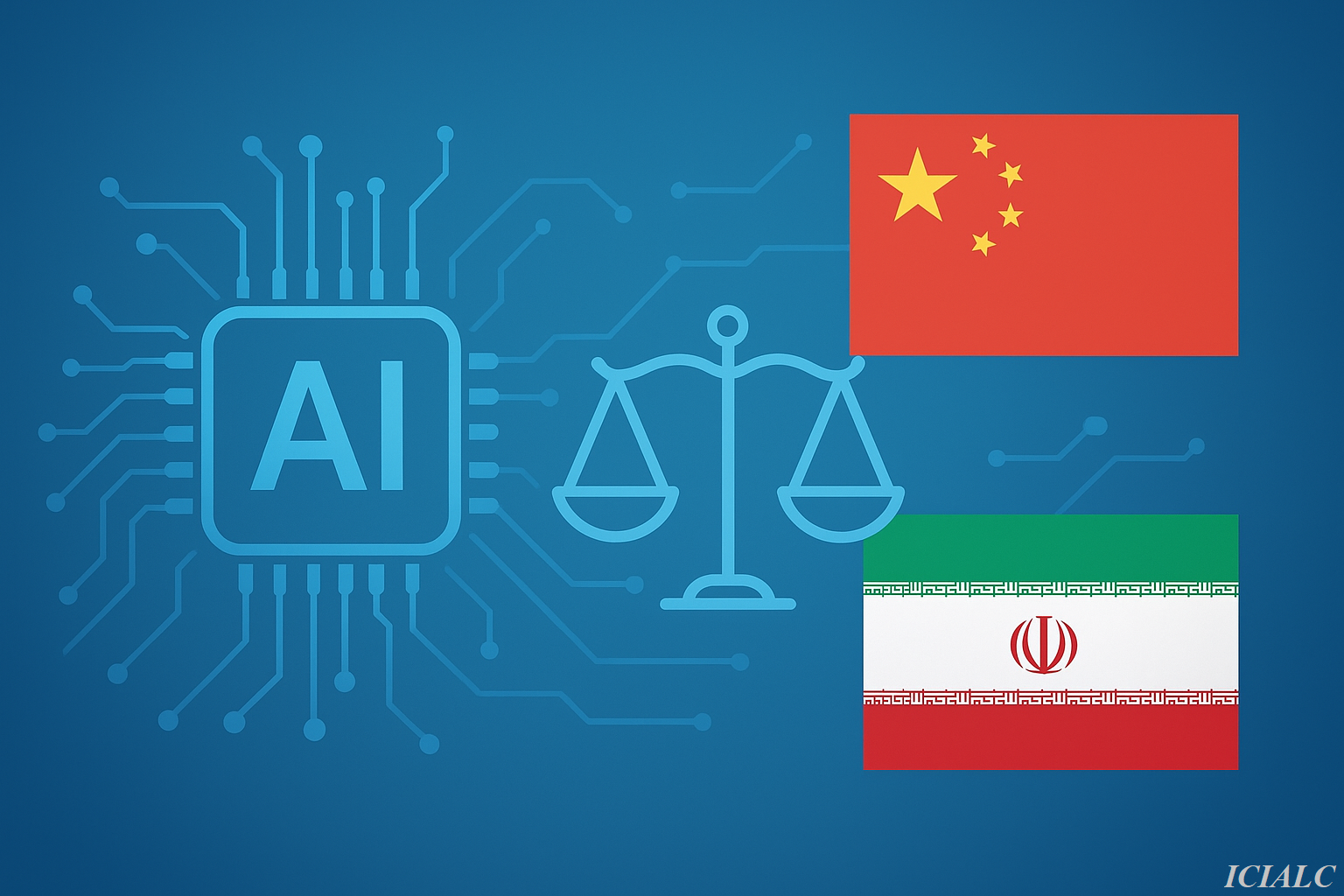
With the growth of commercial disputes and the increasing volume of multilingual documentation in Iran–China economic relations, the use of artificial intelligence as a transformative tool in international arbitration has gained particular importance. This technology not only increases the speed of case review and analysis, but also contributes to greater accuracy, optimal time management, and reduced costs. The role of artificial intelligence in three key areas of arbitration between Iran and China is set out below.
Intelligent analysis of documents and contracts
Artificial intelligence can rapidly process lengthy and complex bi‑ or tri‑lingual contracts and identify core, sensitive, and high‑risk provisions. It is capable of detecting potential inconsistencies, textual ambiguities, and legally risky points and bringing them to the attention of the arbitrator or counsel. In Iran–China relations, where documents are typically drafted in Persian, Chinese, and English, AI‑based language models can significantly improve the accuracy of translation and legal analysis. In addition, artificial intelligence can identify similarities among different versions of contracts, correspondence, and annexes and automatically group them, thereby making case preparation faster and more accurate.
Predicting the conduct of proceedings and likely arbitral outcomes
One of the important functions of artificial intelligence is to analyze arbitration patterns and present probabilistic scenarios for the conduct of proceedings. By reviewing similar cases, arbitrators’ decision‑making patterns, contractual provisions, and the commercial context of the dispute, AI can forecast possible scenarios. Although the final decision must always be taken by a human arbitrator, such analyses are highly valuable for Iranian and Chinese companies in risk management, strategy formulation, and cost estimation. These predictions help the parties decide whether to commence arbitration, pursue settlement negotiations, or adjust their claims.
Intelligent management of scheduling and documentation
Artificial intelligence can optimize a substantial part of the administrative and time‑related aspects of arbitration through smart case‑management systems. Taking into account the time difference between Iran and China, it can propose the most suitable times for hearings and, by sending automatic reminders, keep the parties informed of arbitral deadlines and procedural obligations. Furthermore, document classification, automatic version control, and the prevention of reliance on incorrect or incomplete files increase the accuracy of the process. The generation of security reports and activity logs also helps to preserve confidentiality and ensure a transparent procedural record. Taken together, these features make the arbitral process faster, more orderly, and less prone to error.
Advantages and challenges of using technology and artificial intelligence in arbitration

The use of modern technologies and artificial intelligence in arbitration has created significant advantages for Iranian and Chinese parties. The most important result of this transformation is the increased speed of proceedings, since eliminating reliance on hard‑copy documents, digitalizing document exchange, and reducing the need for in‑person hearings have made it possible to resolve cases in a much shorter time. Cost reductions, particularly in international disputes that typically require multiple trips and complex logistical arrangements, represent another major benefit. In addition, smart systems are highly capable of analyzing voluminous, multilingual documentation, which improves the accuracy of decision‑making. Greater transparency, real‑time monitoring of case progress, and a reduction in misunderstandings arising from linguistic and legal differences between Iran and China are further practical benefits of this digital transformation.
Despite these advantages, the use of technology and artificial intelligence in arbitration is also accompanied by serious challenges. The first challenge concerns information security, as the exchange of sensitive commercial documents between the two countries requires robust encryption infrastructures and secure servers to prevent any intrusion or unauthorized access. Another key issue is confidentiality, which is a fundamental principle of arbitration; digital systems must therefore be designed in a way that fully safeguards this principle. Moreover, regulatory differences between Iran and China in the field of data management may create complexity. China has a very stringent framework governing data management and transfer, and Iran has, in recent years, been developing new data‑protection legislation; accordingly, a harmonized legal framework between the two countries is necessary. Another challenge is over‑reliance on artificial intelligence. Although AI can assist in document analysis, scheduling, and decision‑support, it cannot replace human judgment. The final decision in arbitration must still be made by a human arbitrator, and the role of artificial intelligence must remain that of an auxiliary tool.
International standards relating to digital arbitration
With the increasing use of technology in arbitral proceedings, international institutions have developed sets of rules and guidelines to ensure security, transparency, and procedural consistency. Aligning arbitration between Iran and China with these standards can not only increase efficiency but also significantly enhance the level of confidence among investors and companies active in bilateral trade. In the international framework, the electronic arbitration and mediation rules developed by UNCITRAL provide an important basis for the use of digital tools in dispute resolution. The International Chamber of Commerce (ICC) has also issued comprehensive guidelines on virtual hearings, digital document management, and secure communications. In China, CIETAC, as a leading arbitral institution, has introduced modern rules for online arbitration and even employs blockchain technology to record evidence and preserve the authenticity of documents. In Iran, some arbitral institutions are moving toward the use of electronic systems, and this trend can be harmonized with global standards. Bringing Iran–China arbitration into line with such frameworks will enhance transparency, speed, and the credibility of proceedings at the international level.
The role of Iran and China in the development of digital arbitration
Expansion of digital arbitration requires technological capabilities, compatible legal frameworks, and practical experience. Iran and China have each followed different but complementary paths in this field, and combining their capacities can create a new model of intelligent regional arbitration.
Capabilities of Iran
In recent years, Iran has begun to deploy electronic systems in certain arbitral institutions and has developed domestic platforms for case management and document exchange. Growth in the fintech sector, electronic commerce, and technology law has also created a suitable environment for improving digital arbitration. These emerging infrastructures can serve as a foundation for establishing integrated arbitral systems between Iran and China.
China’s experience in smart justice
China is regarded as one of the world’s most advanced legal systems in the field of digital justice. Through the establishment of smart courts equipped with artificial intelligence, the provision of extensive online arbitration services, algorithmic analysis of legal documents, and the use of blockchain for recording and validating evidence, China has created an efficient operational model at the international level. China’s experience demonstrates how technology can accelerate proceedings while simultaneously strengthening transparency and public confidence in the arbitral system.
Combining Iran’s capacities with China’s advanced experience can hasten the development of digital arbitration between the two countries and shape a new model of legal and technological cooperation. This synergy offers a valuable opportunity to establish a modern and secure arbitral framework aligned with global standards.
Recommendations for strengthening Iran–China arbitration in the digital environment
The development of digital arbitration between Iran and China requires a combination of technical infrastructure, legal standards, and close cooperation between the arbitral institutions of both countries. Given the growing volume of trade and the increasing complexity of disputes between Iranian and Chinese companies, the implementation of a set of coordinated measures can render proceedings more efficient, secure, and predictable. One of the most important steps is the creation of a joint case‑management platform that enables document exchange, filing of requests, and tracking of arbitral stages within a unified and secure environment. In parallel, the use of specialized machine translation under the supervision of legal experts from both countries can reduce language barriers and enhance the accuracy of document analysis.
Drafting a joint protocol on confidentiality and data security is also essential, since the flow of information between Iran and China must comply with strict digital security standards. Training arbitrators and legal experts in new technologies and familiarizing them with AI‑based tools plays a key role in their proper and effective use. Establishing a clear ethical framework for the use of artificial intelligence in arbitration and encouraging contracting parties to include “digital arbitration” clauses in their commercial agreements can further provide the legal and practical basis for wider acceptance of this model. Collectively, these coordinated measures will provide the necessary infrastructure for the emergence of an advanced digital arbitration system between the two countries.
Conclusion
New technologies and artificial intelligence have transformed the framework of international commercial arbitration and directed dispute resolution toward greater speed, higher accuracy, and lower costs. In the expanding economic relations between Iran and China, making use of these capabilities can play an important role in improving the quality of dispute resolution, facilitating commercial cooperation, and reducing operational burdens on the parties. However, achieving an efficient digital arbitration system requires serious attention to challenges such as data‑exchange security, preservation of document confidentiality, and harmonization of the legal regulations of both countries. Adopting a systematic approach to drafting common standards, deploying technological tools, and strengthening the technological skills and training of arbitrators can help establish a reliable and robust infrastructure for digital arbitration. Ultimately, close cooperation between Iran and China in developing technological mechanisms and drawing on successful global experiences can place them on the path to becoming one of the leading regional models of digital arbitration, thereby further enhancing the confidence of investors and economic actors.