 FA
FA
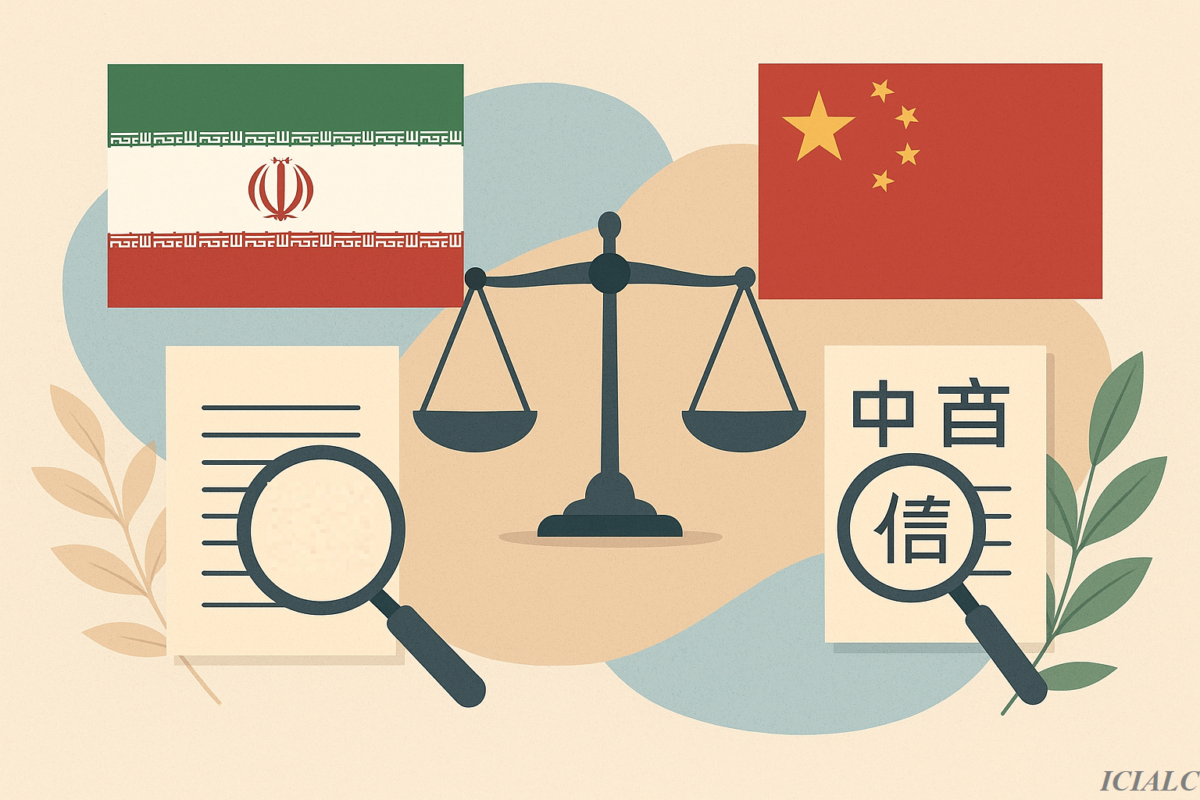
In the sphere of international commerce, commercial disputes are inevitable. When two companies or individual traders from different countries—such as Iran and China—enter into a contract, various factors may lead to performance issues: delays in delivery, failure to make payment, disagreements over product quality, or shifts in market conditions. In such circumstances, the parties must decide which forum will resolve their dispute: state courts or international arbitration.
The choice between these two methods is not merely a legal decision it is a critical commercial decision with direct consequences on time, cost, business relations, and the future of cooperation. This article seeks to analyze the distinctions between court litigation and arbitration to ascertain which option is more suitable for Iranian–Chinese cross-border trade relations.
Definitions and General Concepts
What Is a Court?
Courts are formal and governmental institutions tasked primarily with resolving disputes and administering justice under domestic law. In court litigation, a judge appointed by the state and vested with jurisdiction adjudicates disputes between natural persons (individuals) or legal entities (companies and organizations). After reviewing evidence and hearing arguments, the judge renders a binding decision enforceable under law.
Key characteristics of courts include:
Formal and legal proceedings: Courts operate under codified and rigid procedural rules. While these rules provide order and transparency, they often prolong the adjudication process.
Binding force of judgments: Court decisions are legally enforceable. In case of non-compliance, enforcement tools such as asset seizure or arrest warrants may be invoked.
Public hearings: Except in limited cases permitted by law (e.g., family or national security matters), court hearings are public. While serving transparency, this may be detrimental for traders who require confidentiality.
Appeal and review: In most legal systems, including Iran and China, a dissatisfied party may appeal a judgment to higher courts (Courts of Appeal or Supreme Court). Although enhancing accuracy, this adds time and additional cost.
State authority and legitimacy: Courts function under the judiciary and government supervision, conferring significant official weight on their decisions.
In sum, courts are more apt for domestic disputes or matters requiring strong and immediate government-backed enforcement.
What Is Arbitration?
Arbitration is a private and consensual mechanism of dispute resolution founded on party agreement. Simply put, the parties to a contract agree either at the time of contract signing or after a dispute arises—that instead of litigating in state courts, they will submit the matter to one or more neutral arbitrators or an arbitral institution.
Key features of arbitration include:
Flexibility of procedure: Unlike courts bound by rigid procedural codes, arbitration allows parties to determine many aspects of the process venue, language, number of arbitrators, and even the governing law.
Expedited process: Arbitration typically concludes within several months to a year. Courts, conversely, may take several years.
Choice of arbitrators or institution: Parties may entrust the dispute to professionals skilled in the relevant field (e.g., specialists in international commercial law or technical experts). Reputable arbitral centers, such as CIETAC (in China), ICC (Paris), or regional hubs such as Singapore or Istanbul, are frequently chosen.
Confidentiality: A major advantage is the complete confidentiality of proceedings. Sensitive commercial and financial information remains undisclosed—a factor of great importance in maintaining competitive advantage.
International enforceability: Arbitral awards are enforceable under the 1958 New York Convention, to which over 160 states are parties. Both Iran and China are signatories, meaning an award rendered in Beijing may be enforced in Tehran, and vice versa. Court judgments lack such global enforceability.
Finality of awards: Generally, arbitral awards are final and not subject to appeal, except in limited cases (e.g., corruption or procedural irregularities). This ensures swift closure, though it may feel adverse to a losing party.
Thus, arbitration is particularly appropriate for international and major commercial disputes, where speed, confidentiality, and global enforceability are critical.
Comparative Analysis: Arbitration vs. Court

Procedural Timeline
Courts: Subject to multi-tier appeals. In Iran, cases may advance from the court of first instance to the court of appeal, and even to the Supreme Court—a process lasting years. China likewise employs a multi-level judicial structure. This prolongs disputes and raises costs.
Arbitration: Parties may tailor timelines, and typically proceedings resolve within one year. This time-efficiency is crucial for traders.
Costs
Courts: Expenses include filing fees, expert costs, service of process fees, and legal representation. Initially lower than arbitration, yet prolonged litigation indirectly incurs high costs (loss of capital use, missed opportunities, damaged international relations).
Arbitration: Fees for arbitrators and arbitral institutions can appear high. However, the overall process is often more cost-effective in international contracts due to the shorter timeframe and avoidance of long-term opportunity losses.
Confidentiality
Courts: Proceedings are often public, threatening exposure of sensitive trade or financial data.
Arbitration: Inherently confidential, safeguarding business reputations and trade secrets.
Enforceability of Decisions
Courts: Iran and China have put into effect a Judicial Cooperation Treaty in Civil and Commercial Matters since 2021, which enables the mutual recognition and enforcement of judgments. However, the enforcement of a foreign court judgment in the other country is not automatic and requires a judicial process, including a review of conditions such as the finality of the judgment, compliance with due process, and the absence of conflict with public order.
Courts: Judges generally have broad legal training, but may lack practical expertise in specialized areas of international commerce, energy, shipping, or intellectual property.
Arbitration: Parties may designate arbitrators renowned in the pertinent commercial or technical field, enhancing the quality and acceptance of awards.
Strengths and Weaknesses
Advantages of Courts
Formal legitimacy and governmental authority.
Enforcement backed by state powers.
Usually lower costs in purely domestic disputes.
Right to appeal ensures accuracy of rulings.
Disadvantages of Courts
Multi-stage process is protracted.
Public hearings jeopardize confidentiality.
International enforcement of judgments is limited.
Advantages of Arbitration
Rapid and flexible procedure.
Confidentiality preserves trade secrets.
International enforceability under the 1958 New York Convention.
Choice of arbitrators ensures relevant expertise.
Disadvantages of Arbitration
Higher initial fees compared to domestic court litigation.
Requires inclusion of an arbitration clause in the contract to be applicable.
Limited possibilities for appeal; awards are generally final.
Practical Experience in Iran–China Relations
In Iranian–Chinese trade, arbitration far surpasses courts in frequency of use. The reasons are clear: speed, confidentiality, and international enforceability. In commodity purchase and sales agreements, parties commonly stipulate arbitration under CIETAC (China) or regional institutions (e.g., Singapore or Istanbul). In joint venture projects, where technical complexity is high, arbitration is considered the default mechanism. Experience shows that reliance on domestic courts often leads to enforcement challenges abroad, rendering judgments practically ineffective. Accordingly, arbitration has emerged as the more pragmatic and reliable option.
Conclusion and Practical Recommendations

The decision between courts and arbitration is a strategic one that directly influences time, cost, business relations, and contractual enforcement. For purely domestic and smaller disputes, courts may be cost-effective and suitable due to their governmental backing. However, for international, complex, or high-value disputes, arbitration is almost invariably the superior choice.
Recommendations:
When negotiating Iran–China commercial contracts, expressly and precisely incorporate a well-drafted arbitration clause to preserve the option of arbitration.
Specify at the outset the arbitral institution and governing rules to avoid ambiguity.
Traders and their counsel should work with specialized legal advisors to draft arbitration clauses that are comprehensive, clear, and enforceable.
Final Word:
In Iran–China trade relations, arbitration is not merely a dispute resolution tool; it is a vehicle for safeguarding business partnerships, mitigating risk, and ensuring effective enforcement of contracts. This is why international traders overwhelmingly prefer arbitration over court litigation, making it their primary instrument of dispute resolution.